Churches of historical and architectural interest.
| Status: | Active, open to new members |
| Coordinator: | |
| When: | Monthly on Friday mornings 1st Friday of each month variable times Locations vary but usually leaving WMCC |
| Venue: | West Maldon Community Centre |
| Cost: | Costs: Car share costs / Train Travel and donations to churches on the day. |
Visit to Chelmsford Cathedral 14th August
Our U3A group enjoyed a richly rewarding visit to Chelmsford Cathedral Church of St Mary, St Peter and St Cedd, led by our excellent guide, Wes.
Christianity was brought to East Anglia by St Cedd in the 7th Century after paganism which had followed the withdrawal of the Romans. The vast increase of population east of London led to the creation of the Diocese of Chelmsford in 1914, this parish church having been chosen as the Bishop’s seat.
The Nave
The nave with its colourful ceiling was rebuilt in the early 19th Century after a collapse due to excavation of the vaults.
The Chancel
There has been a church on this site since the 13th century. It was rebuilt in the 15th and early 16th centuries. On the roof trusses are the arms of the diocese of Chelmsford and of the three other dioceses to which the church successfully belonged – London, Rochester and St Albans. The centrepiece of the chancel is the Westmorland slate altar, and the bronze and steel ambos each side of the chancel arch. Recently, four icon panels, representing Christ and the three Patron Saints, were built into the ‘blank’ windows above the fan arch.
The North East Corner
High up in the ‘blind’ window of the north transept is The Tree of Life by Mark Cazalet. Below it is a crucifixion icon depicting the living cross, by Helen McIIdowie-Jenkins. To the right is the colourful monument to Thomas Mildmay, his wife Avice and their fifteen children.
South Porch
This dates from 1460 but was enriched in 1953 to mark Anglo-U.S. friendship. Many U.S. airman were stationed in Essex during WW2. The Cathedral has much older links with the U.S.A. Thomas Hooker sometimes called ‘the Father of American Democracy’ was a Town Preacher here before he had to leave for the New World because of his Puritan views.
The Exterior
The walls are of flint rubble mixed with blocks of building stone and brick. The weather vane (29 meters above ground level) portrays a dragon coming out of the sun. On the southeast corner can be found a contemporary sculpture of St Peter, complete with fishing boots, net, and his key. He faces towards Bradwell, where St Peters Chapel is to be found.
A warm thank‑you to Wes for an informative and enjoyable visit.
Geoff Pugh
Co-ordinators: Geoff Pugh, Jim Skelly and Di Martin.
On the 12th June we visited The Srinivasa Perumal Temple in Hatfield Peverel a newly established Hindu temple serving the growing Hindu community across Essex. It occupies a restored former church building on The Street, now transformed into a traditional Vaishnavite place of worship. We were welcomed by Raj Krishna their resident priest.
The temple was formally inaugurated on 16 July 2025, following extensive restoration works on the historic church building. The consecration marked the completion of a long community-led project to create a permanent spiritual home for Hindus in the region.
The temple is dedicated to Lord Srinivasa Perumal, a form of Lord Vishnu revered as the divine protector and giver of prosperity, peace, and spiritual guidance. The building has been restored to include: A Garbhagriha (sanctum sanctorum), Sannidhis (shrines) for multiple deities, sculptures carved by master artisans in India, installed according to traditional Agama principles. It functions not only as a place of worship but also as a community and cultural centre, with outreach to local schools and families.
The temple follows Vaishnavism, a major tradition within Hinduism centred on the worship of Vishnu and his incarnations. It houses several additional shrines, reflecting the inclusive nature of South Indian Hindu worship:
Lord Ganesha (Vijaya Ganapathy) — remover of obstacles, invoked at the start of all undertakings.
Lord Murugan (Subramanya) — symbol of courage, clarity, and victory.
Lord Ayyappa — embodiment of discipline, unity, and spiritual awakening.
Lord Shiva — supreme yogi, representing creation, preservation, and transformation.
We found this a most interesting and fascinating visit and were invited to attend one of their festivals in the future.
Following this visit, we had a lunch at The Owl on the Green at Terling and then went on our way to attend the Parish Church of St Nicolas, Chipping Hill, Witham.
This church is located in the ancient heart of Witham. It is the oldest building in the town and is a Grade 1 listed building. The church is close to the site of an Iron Age Fort dating back to 500 B.C.
The church was dedicated to St Nicholas by 1147 but renamed St Nicolas in the 20th century. The present church was built in the 1330’s.
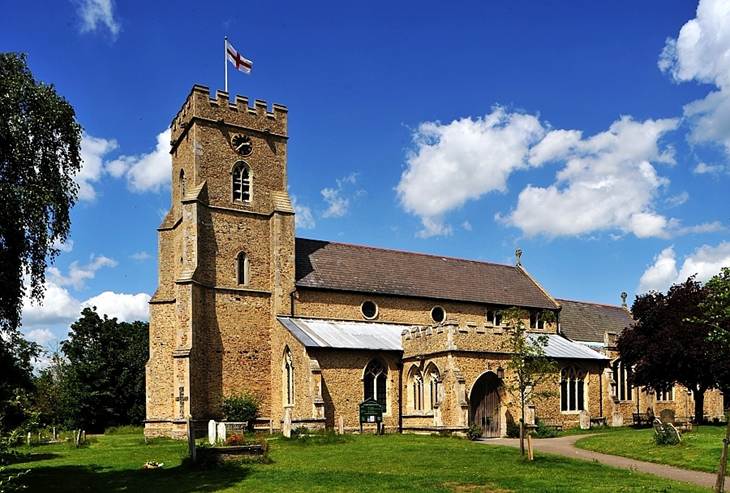
Architecturally, the church is unusual in having been substantially built as an entity rather than in stages over centuries. It originally comprised a nave, north and south aisles, a chancel to the east and a western tower, all in 14th century Decorated style. Except for alterations to the upper part of the tower in 1743 and 1877, the external appearance of the church has changed little in over 500 years.
While there are a number of monuments in the church, the most notable is the tomb of Judge John Southcote and his wife Elzabeth in the North West corner.
More information about the architecture of the church may be found in ‘The Buildings of England: Essex’, by James Bettley and Nikolaus Pevsner.
Geoff Pugh
Our 10 July visits will be St Andrews Church in Hatfield Peverel and All Saints Church, Ulting. Meet at 10.15a.m. for car share at WMCC arranged by Chris Elliott.
Co-ordinators: Geoff Pugh, Jim Skelly & Di Martin

All are welcome to join us on our visits to places of worship. Visits are usually arranged for the first Friday of each month. The locations vary greatly e.g. visits to places of worship sited locally are conducted in an afternoon, visits to locations some distance away may require a full day.
It has been our practice to travel by train to London at least twice each year. This has provided the opportunity to access two synagogues, the Queen’s Chapel of the Savoy and many of Wren’s churches in the East End, although there are more to see.
Travelling by car share for full day excursions has taken us to North Essex, eg Saffron Walden, Stansted Mountfitchet and into Suffolk. A full day excursion gives us the bonus of sharing lunch at a hostelry. We have the privilege of being welcomed by custodians of churches/chapels who are well versed in the historic and social history of their churches. Refreshments are usually served which provides time to chat about what we have discovered, to share personal knowledge and to ask questions.
Details of visits will be shown in the newsletter and on the web site. Sign-up sheets will be available at the monthly meetings. If interested in a particular visit please use the sign-up sheets, or notify the co-ordinator by email, or use the contact page. This will enable us to notify you of any changes that may be necessary.
Costs include car share if used, train fare (we take advantage of ‘group savers’) and donations to the church on the day.
PROPOSED CHAI VISITS FOR 2025
|
4 July |
Black Chapel North End & St Mary the Virgin Gt Leighs - to be confirmed |
Geoff |
|
1 August |
Monastery of St John the Baptist, Tolleshunt Knights 2pm - cancelled |
Di |
|
5 September |
St Lawrence Church on the hill & St Nicholas Church, Tillingham – to be confirmed |
Jim |
|
10 October |
Holy Trinity Church, Hatfield Heath am, lunch |
Di |
|
7 November |
St John the Baptist Church, Danbury & St Andrew’s Church, Sandon - to be confirmed |
Jim |
|
5 December |
All Saints Church, Maldon to see Christmas trees. This could be morning and lunch possibly at the Oakhouse. |
Di |
Wherever possible all visits first Friday in month
No visits January or February 2026
